Staying Reachable Off-Grid: Weather Alerts, Signal Devices and a Simple Comms Plan
By Melt Party Gear Team · August 18, 2026 · 4 min read
Out of cell range, staying reachable takes the right devices and a plan the people at home understand. Here is how to put both together.
Heading somewhere without cell service is part of the appeal of the backcountry. It also means the usual ways of checking the weather or asking for help may not be there when you need them. Staying reachable off-grid is less about one perfect gadget and more about combining the right devices with a simple plan that the people at home understand. This guide covers both.
Know what you are planning for
Before choosing gear, think about what could realistically happen on your trip:
- The weather turns. A storm builds faster than forecast, a cold front arrives early, or heavy rain raises streams you need to cross.
- Your group gets separated. Someone takes a wrong turn, or the group splits up to scout a route.
- Plans change. An injury, a closed trail or slow progress means you will be out longer than expected, and someone at home needs to know.
Each of these calls for a slightly different tool, which is why a layered approach works best.
Weather alerts and radio
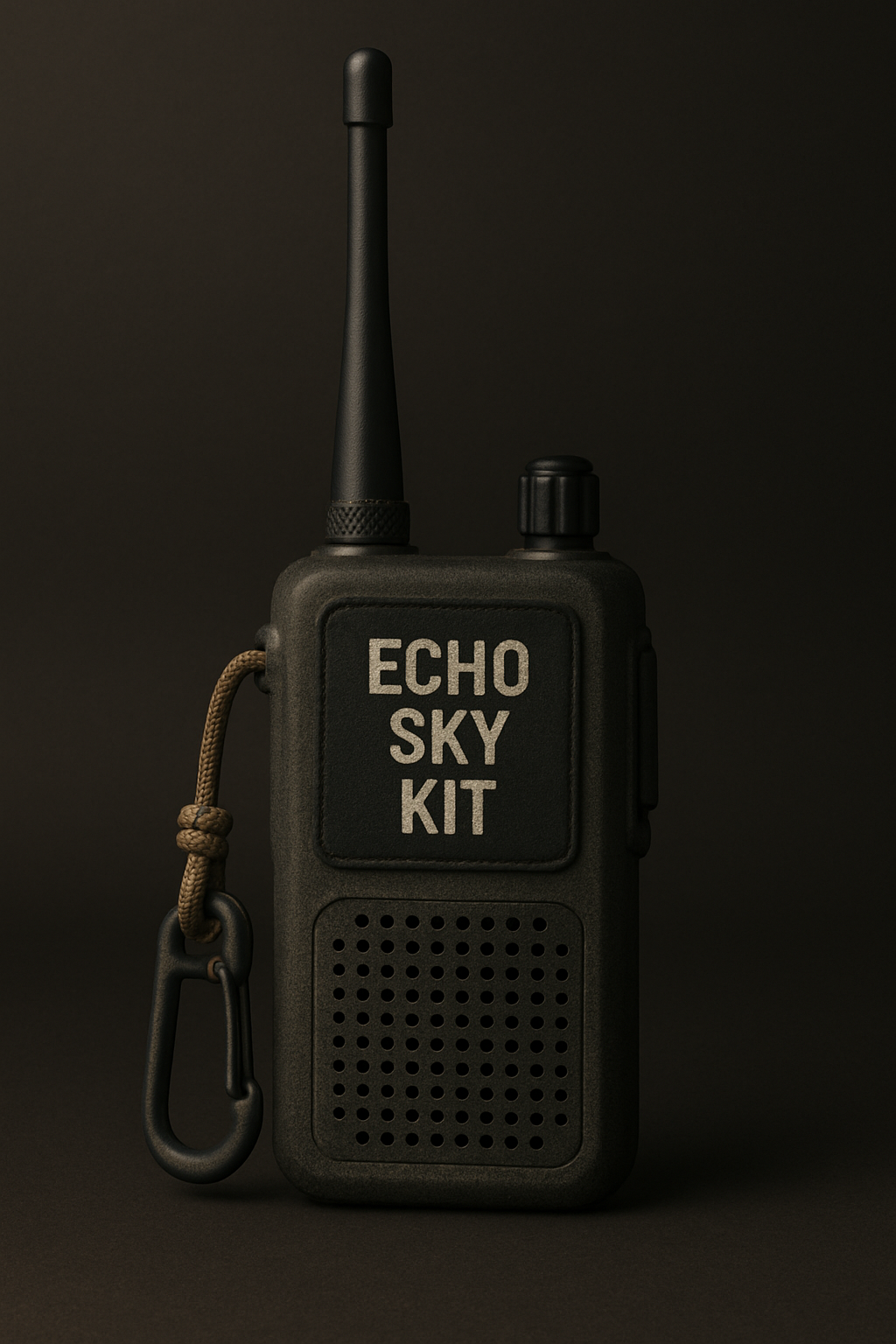
When you lose cell service, you also lose weather apps and alerts. A radio that receives weather broadcasts fills that gap. The Echo Sky Kit combines NOAA weather alerts with FM/AM tuning and a powerful built-in flashlight. It comes with a rugged carabiner and a durable antenna, and it is designed for backcountry treks, storms and power outages.
Because it covers both weather alerts and regular broadcasts, the same device is just as useful at home during a power outage as it is at camp. Get into the habit of checking the forecast each morning and evening on longer trips, and before you commit to an exposed section such as a ridgeline or a river crossing.
Signaling and staying in touch
Being able to signal your position and share basic information helps both within your group and with others nearby. The Signal Glade Tool is a rugged, palm-sized unit built for communication, beaconing and emergency data relay. It has a bright display and textured grips, and it is designed for field teams that need connectivity and signal clarity in wilderness or off-grid areas.
For groups, agree before the trip on how you will use your devices: who carries what, how often you will check in with each other, and what you will do if someone does not respond.
Gear for cold-weather trips
Cold weather is hard on electronics. Batteries lose capacity, screens slow down, and gloves make small buttons difficult to use. The Frost Hollow Device is built for extreme environments, with ruggedized housing, a thermal-safe grip and insulated electronics. It is designed for signaling, location tracking and activating cold-weather gear.
Whatever devices you carry in winter, keep them close to your body during the day, store them in your sleeping bag at night, and carry spare power where the device supports it.
An important limit
The devices in this guide are not a substitute for a certified personal locator beacon or for calling emergency services. They can help you get weather information, signal your position and stay organized, but they are not certified emergency equipment. If you are heading into remote terrain where you may need rescue, research and carry a certified emergency device appropriate for where you are going, and know how to reach emergency services.
Make a simple communication plan
The best device in the world will not help if nobody knows you are overdue. A communication plan is free and takes ten minutes to set up.
Write a trip plan
Leave your plan with a trusted person who is not on the trip. Include:
- where you are going, your planned route and any alternatives;
- where you will park, and a description of your vehicle;
- who is in your group;
- what gear you are carrying, including any communication devices;
- when you expect to be back.
Set check-in times
Agree on specific times when you will make contact, such as when you reach the trailhead and when you are back at the car. Be realistic and leave room for slow progress, so that a small delay does not cause unnecessary alarm.
Agree on what happens if you miss one
Decide in advance how long your contact should wait after a missed check-in, and exactly whom they should call. Write down the phone number for the relevant local authority, such as the ranger station or sheriff's office for the area, so they are not searching for it under stress.
Choose emergency contacts
Every person in your group should have an emergency contact who knows the plan. Keep those contacts' details written on paper as well as in your phone.
Keep your devices ready
- Charge everything before you leave, and test each device at home so you know it works and how to use it.
- Carry spare power for devices that need it, and protect devices and batteries from water in a dry bag.
- Know the controls well enough to use them with cold hands, in the dark, or while stressed.
- Review your kit after each trip, and replace or recharge anything you used.
Building your off-grid kit
Staying reachable comes down to three things: knowing the weather, being able to signal, and making sure someone knows your plan. A weather radio like the Echo Sky Kit, a signaling unit like the Signal Glade Tool and, for winter trips, the Frost Hollow Device cover the gear side. You can explore more in our Tech collection. The plan side costs nothing, so make one before every trip.