Packing a 72-Hour Kit You'll Actually Keep Ready
By Melt Party Gear Team · October 27, 2026 · 4 min read
A 72-hour kit only helps if it is packed and current. Here is what to include, how to organize it, and a simple routine that keeps it ready.
A 72-hour kit, sometimes called a go bag, holds what you would need to get through about three days on your own: after a storm knocks out power, during an evacuation, or when roads close and help is slow to arrive. Lots of people start one. Far fewer keep it packed and up to date. This guide covers what to put in a kit, how to organize it, and how to keep it ready without making it a chore.
Start with the container
The container decides how easy your kit is to grab, carry and keep organized. Many people use two levels: a main bag for the bulk of the kit and smaller pouches inside it, grouped by job.
- The main bag. The Coastal Track Pack has a roll-top closure that protects contents from the elements, a large capacity, side mesh pockets and front MOLLE webbing. Being able to seal the bag matters if you may have to leave in rain or store the kit somewhere damp.
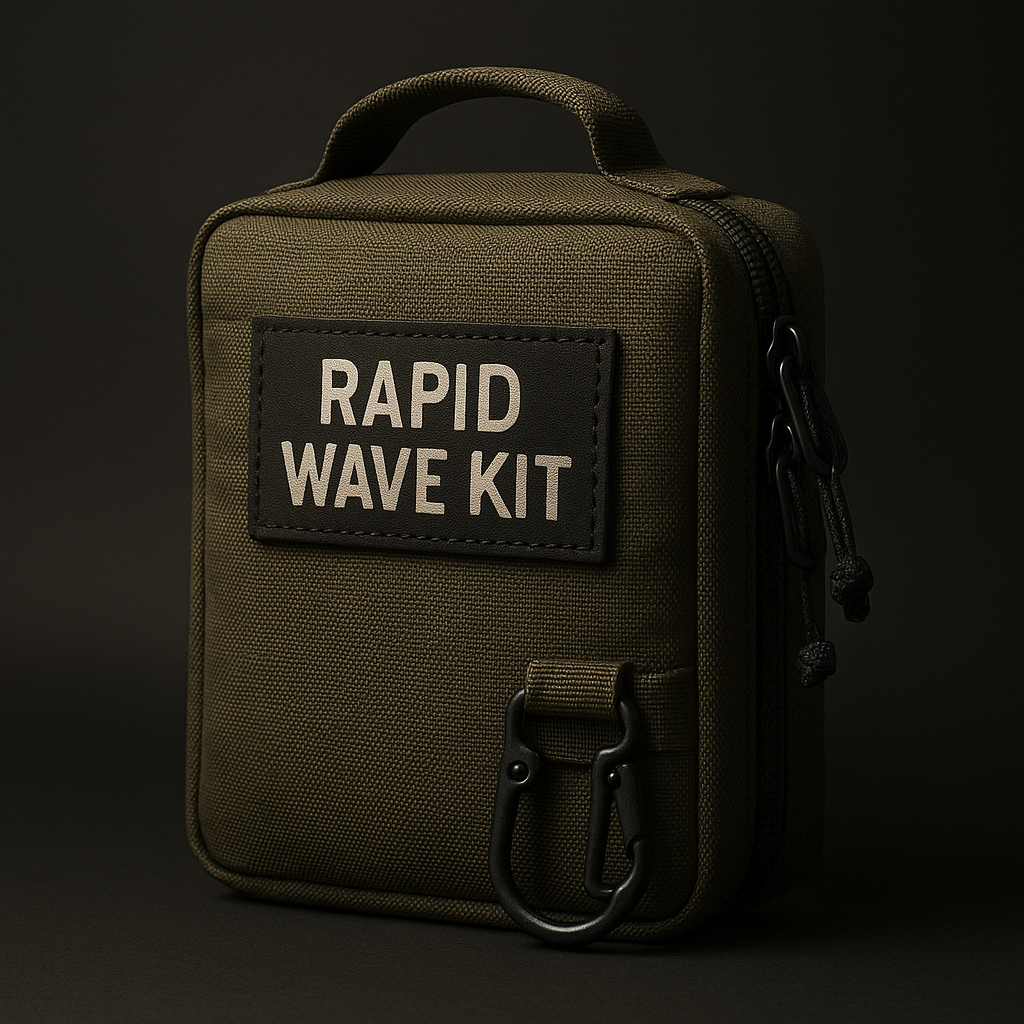
- Pouches for small items. The Rapid Wave Kit is an emergency essentials pouch with a rugged shell, internal compartments and a quick-clip carabiner, designed for organizing quick-access tools, signaling gear or hydration tablets.
Grouping items in labeled pouches means you can find what you need quickly, and you can see at a glance when something is missing.
What to pack
Every household is different, but most kits cover the same core categories.
Water
Water is the most important item and the heaviest. Follow the guidance of your local emergency management agency for how much to store per person. Add a way to treat water, such as a filter or purification tablets, so you are not limited to what you can carry.
Food
Choose food that does not need refrigeration or much preparation, and that you will actually eat. The Field Ration Resupply box includes twelve shelf-stable entrées, six high-calorie snack packs, flameless heater sleeves and a folding spork, packed in a crush-resistant carton. Flameless heaters mean a hot meal is possible without a stove or open flame. If you prefer a regular restock, see the product page for delivery options.
Light
Power outages are one of the most common reasons to open a kit. Pack at least one reliable flashlight per person, with spare batteries or a way to recharge it. A hands-free light makes tasks much easier in the dark.
Communication and information
When the power is out, a radio that receives weather alerts and local broadcasts can be your main source of information. Include a way to charge your phone, and a written list of important phone numbers in case your phone is not available.
Tools
A compact multi-tool handles many small jobs, from opening packaging to adjusting gear. The Twin Dune Tool combines a dual wrench head with a prying edge and a hex slot, and it is wrapped in durable paracord for extra grip and emergency use. Add duct tape, a fire starter and a whistle.
First aid and medication
Pack a first aid kit and know how to use what is in it. Include a supply of any prescription medications your household relies on, plus copies of prescriptions, glasses or contact lenses, and other personal medical items.
Documents, cash and personal items
- copies of important documents such as identification and insurance, in a waterproof bag;
- some cash in small bills, in case card payments are unavailable;
- a change of clothes, sturdy shoes and a warm layer for each person;
- basic hygiene items;
- items for children, older relatives and pets.
Make it fit your household
A generic list is a starting point, not a finished kit. Think about who is in your household and where you live:
- Climate. Add warm layers and blankets for cold regions, and extra water and sun protection for hot ones.
- Likely events. Think about the hazards most common where you live, such as storms, wildfires, floods or earthquakes, and adjust the kit accordingly.
- Mobility. If you may have to leave on foot, keep the main bag light enough to carry comfortably. Heavier supplies can stay in a home kit for sheltering in place.
- Vehicle. Consider a smaller second kit in the car.
Keep it ready: rotate and check
The hardest part of a 72-hour kit is not packing it. It is keeping it useful. Food expires, batteries drain, medications change, and children outgrow clothes. A simple routine keeps the kit ready:
- Put it on the calendar. Pick two dates a year, such as when the clocks change, and review the kit on those days.
- Check dates. Look at expiry dates on food, water, medications and batteries. Eat or use items that are close to expiring, and replace them.
- Test your gear. Switch on lights and radios, and charge anything rechargeable.
- Update for changes. Adjust clothing sizes, medications, documents and contact lists as your household changes.
- Write it down. Keep a short contents list with dates inside the bag, so the next check takes minutes.
Rotating food into your regular meals means nothing goes to waste, and it keeps the kit fresh without extra spending.
Store it where you can grab it
Keep the kit somewhere easy to reach on the way out: near an exit, in a hall closet or by the garage door. Make sure everyone in the household knows where it is and what is inside. A kit that is buried at the back of a closet is a kit that gets left behind.
Building your kit
Start with a roll-top bag like the Coastal Track Pack, organize small items in pouches such as the Rapid Wave Kit, and stock up on shelf-stable food like the Field Ration Resupply. Add a dependable multi-tool such as the Twin Dune Tool, then fill in the rest from the list above. You can find more in our Provisions and Camping collections. Most importantly, set a reminder to check your kit, so it is ready on the day you need it.