Choosing Trail Lighting: Wrist Lights, Pocket Torches and High-Lumen Beams
By Melt Party Gear Team · September 22, 2026 · 4 min read
Longer nights mean more time on the trail in the dark. Compare wrist-mounted lights, pocket flashlights and high-lumen beams, and learn how to plan your power.
When the sun drops earlier in fall, more of every trip happens in the dark: the last mile back to the car, setting up camp, or a pre-dawn start. The right light makes those hours safer and much less frustrating. But no single light is perfect for every job. This guide compares three common forms, wrist-mounted lights, pocket flashlights and high-lumen beams, and explains how to choose and use them well.
Start with the job, not the light
Before comparing products, think about what you actually do after dark:
- Close-up tasks such as pitching a tent, cooking or sorting gear, where you need both hands free.
- Moving on a trail, where you need to see your footing and the trail ahead.
- Searching and signaling, where you need to see far, find a trail marker or a landmark, or be seen by others.
Most people need to cover more than one of these, which is why many carry two lights of different types.
Wrist-mounted lights: hands-free work
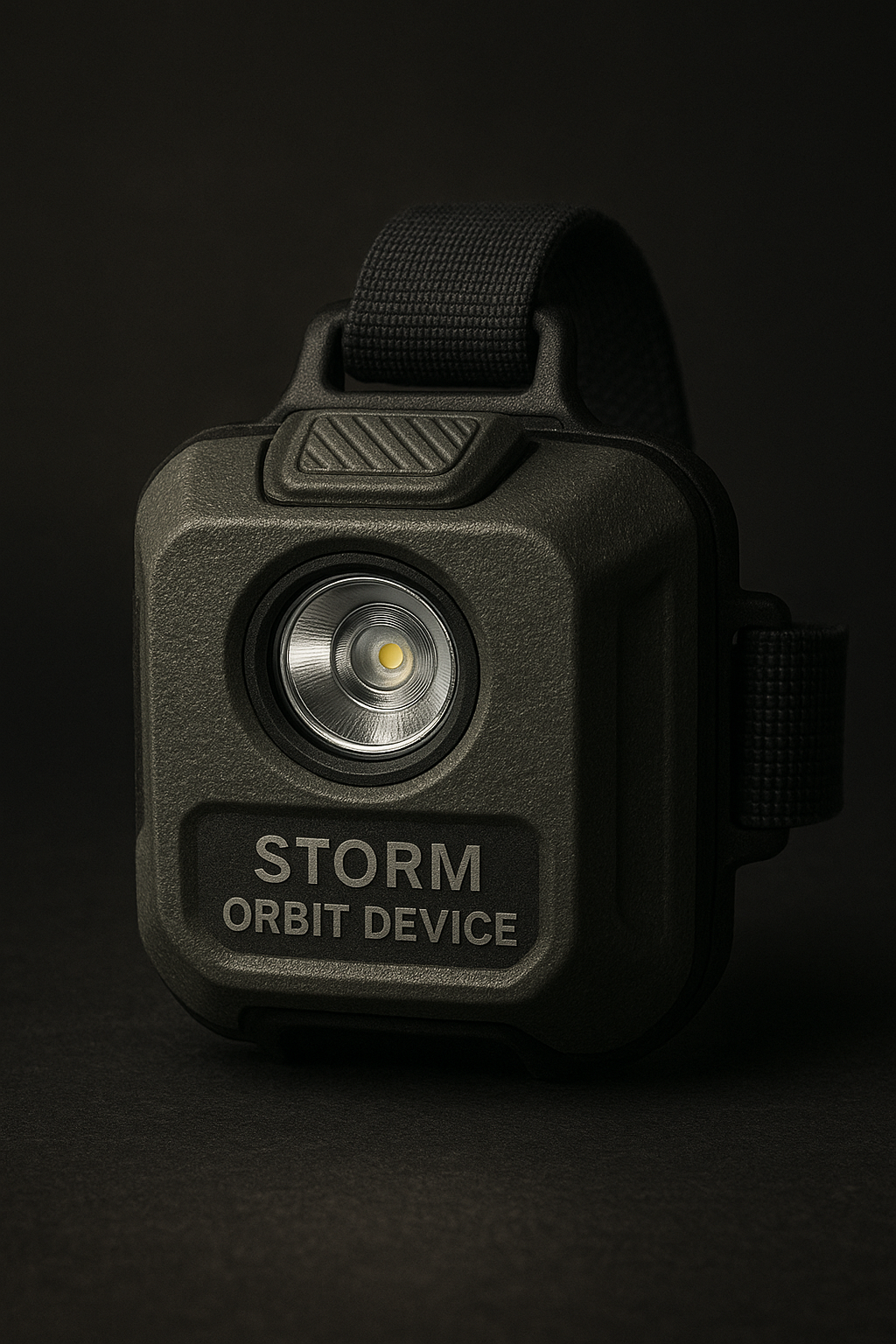
A light strapped to your wrist goes wherever your hands go, which makes it ideal for close work. When you reach into a pack, tie a knot or adjust a stove, the light points at the task without you having to hold it. The Storm Orbit Device is a rugged, wrist-mounted flashlight built for hands-free illumination. It has an ultra-bright LED core, a water-resistant housing and a durable strap, and it is designed for night operations, search and rescue and utility work.
A wrist light is also useful on the trail, where it lights the ground in front of you as you walk. Because it moves with your arm, it suits tasks and short walks more than long stretches of steady trail.
Pocket flashlights: always with you
The best light is the one you have with you, and a small flashlight is easy to carry every day. It slips into a pocket or clips to a pack strap, ready for an unexpected late return or a power outage at home. The Stealth Brook Device is a lightweight, pocket-sized tactical flashlight built for nighttime navigation. It has textured grip zones, a recessed power switch and a rugged clip.
A recessed switch helps prevent the light from turning on by accident in a pocket or pack, which is one of the most common ways to find a dead light at the moment you need it.
High-lumen beams: seeing far
Sometimes you need to see well beyond your feet: to pick out a trail marker across a clearing, scan a slope, find the next cairn or signal your position to someone at a distance. A focused, high-output beam does that job. The Prism Blaze Device is a high-lumen tactical flashlight with a dual-tone rugged casing for a secure grip and a focused reflector cone that concentrates the beam. It is designed for search, signaling and field navigation.
A powerful beam is a tool for specific moments rather than constant use. Use it to look ahead, then switch back to a lower light for walking and camp tasks.
Plan your power
Lights fail most often because of power, not because of the light itself. A little planning avoids that:
- Start full. Charge or replace batteries before every trip, and check each light at home.
- Carry a backup. Bring a second light, or spare batteries or a charging option for your main light, on any trip that might run into darkness.
- Use only the light you need. Bright settings drain batteries faster. Save maximum output for when you really need it.
- Keep batteries warm. Cold reduces battery capacity, so carry lights and spares in an inside pocket in cold weather.
- Prevent accidental activation. Lock or store lights so they cannot switch on inside your pack.
Light etiquette on the trail and in camp
A light that helps you can easily dazzle someone else. A few simple habits make nights better for everyone:
- Do not shine a light in people's faces. Point it down when talking to someone, and warn others before switching to a bright beam.
- Protect night vision. Your eyes take time to adjust to darkness. Use the lowest practical setting in camp so you and others can still see the stars and your surroundings.
- Be considerate of other campers. Avoid sweeping bright beams across other tents, and keep lights low late at night.
- Respect wildlife. Bright lights can disturb animals. Use only as much light as you need.
Choosing your setup
For most people, a practical lighting kit includes one hands-free light for tasks and short walks, and one compact flashlight that is always in a pocket or pack. If your trips include route-finding in the dark, or you want to be able to signal over distance, add a high-output beam.
- For hands-free work: the Storm Orbit Device.
- For everyday carry: the Stealth Brook Device.
- For seeing and signaling far: the Prism Blaze Device.
Whatever you choose, practice with your lights at home and on short evening walks before relying on them on a longer trip. You can browse more gear in our Outdoor Utility collection, and Floe, our shopping assistant, can help you compare options.